From your first sale to a stable store: the e-commerce store growth roadmap
From First Sale to Stable Store: The E-commerce Growth Roadmap
The global e-commerce market is set to surpass $6.8 trillion by the end of 2026 — the opportunity is real and massive, but most stores fail not due to weak demand, but because their internal systems were not built to withstand growth itself. This concluding article in our series brings everything we have learned together into one clear roadmap.
The Core Difference Between "Growth" and "Scaling"
Most store owners confuse the two concepts, and the difference is crucial:
Growth means increasing outputs — more orders, more revenue.
True Scaling means increasing outputs without a proportional increase in cost, team size, or operational complexity.
A store that grows in sales but sees its operational issues double at the same rate is not a successful store — it is a store heading toward a delayed crisis.
Phase One: Validation Before Full Development
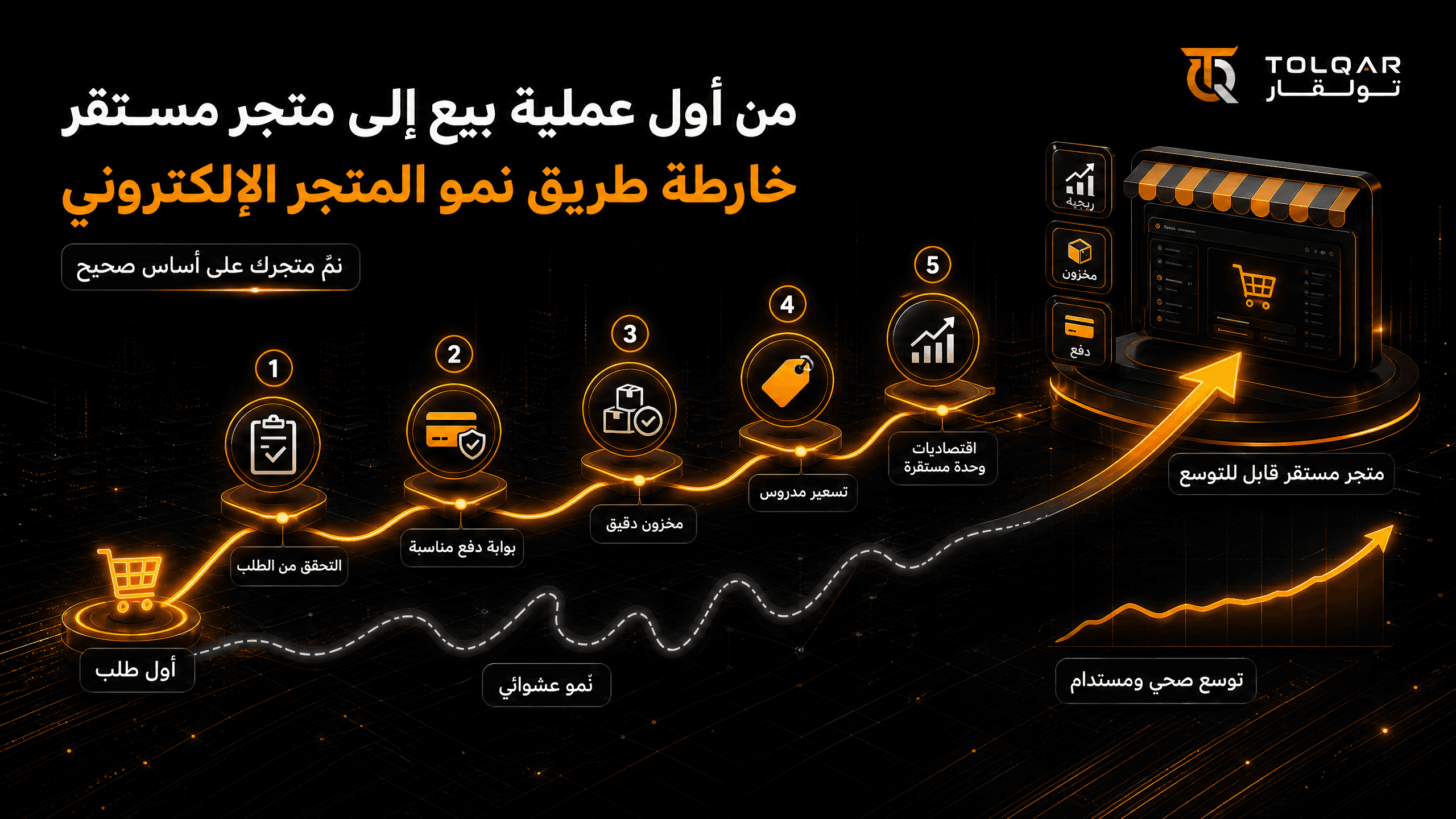
As we discussed in our first article in the series, the biggest failure starts with building a store around a product whose demand has not been genuinely validated. Before any major investment, make sure there are real customers ready to pay, not just theoretical interest in the idea.
Phase Two: A Payment Structure That Serves Your Actual Audience
In our second article, we explored how to choose the right payment gateway for your size and target audience. Remember: adding just one secondary payment option can significantly reduce cart abandonment — this is a simple decision with a major impact on revenue.
Phase Three: An Accurate Inventory System From the Start
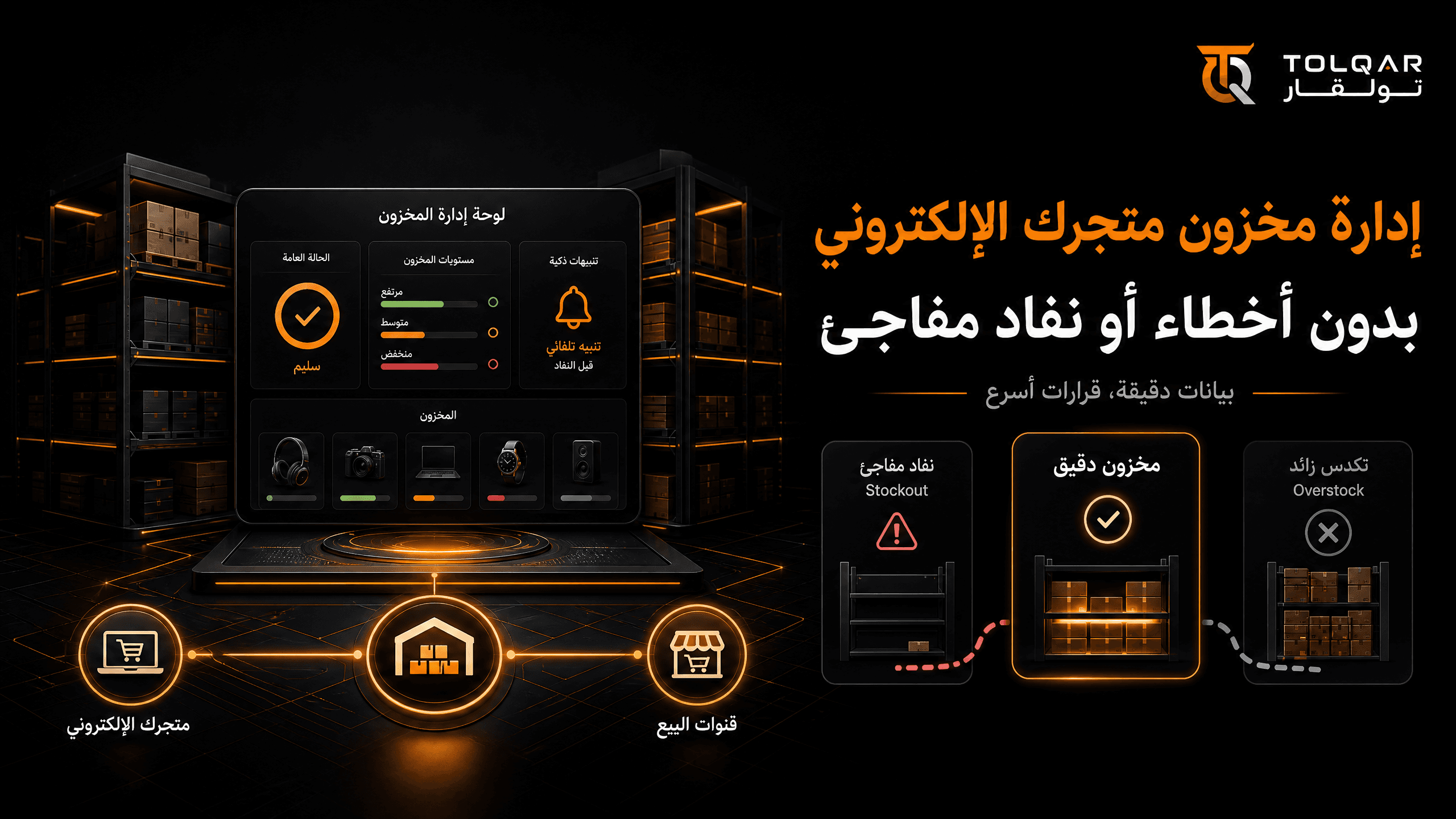
Poor inventory management costs global retail over $1.7 trillion annually, as we saw in our third article. An accurate centralized tracking system from day one saves you from this risk before it escalates with the growth of your sales volume.
Phase Four: A Thoughtful Pricing Structure, Not an Intuitive One
Thoughtful psychological pricing can increase revenue by up to 25% without actually lowering a single price, as we detailed in our fourth article. The difference between a store achieving healthy margins and a store draining itself with continuous discounts often lies in understanding these principles.
Phase Five: Examine Unit Economics Before Any Expansion
Before increasing your ad budget or adding a new sales channel, verify these essential indicators:
| Metric | What It Tells You |
|---|---|
| Contribution Margin | Is every sale actually profitable after all direct costs? |
| Customer Acquisition Cost (CAC) | Is the cost of acquiring a new customer stable or rising dangerously? |
| Marketing Efficiency Ratio (MER) | Is your marketing spend generating a healthy return compared to your revenue? |
| Inventory Turnover Rate | Is your capital moving efficiently or freezing in stagnant inventory? |
| Purchase Frequency Rate (Retention) | Are your customers returning, or are you constantly relying entirely on new customers? |
The Most Common Expansion Mistake: Adding Complexity Before the Foundation is Stable
A common and dangerous pattern: adding a new sales channel before the first channel is stable, or increasing ad spend on a landing page with clear friction that hasn't been fixed yet. This does not double results — it multiplies mistakes at the same rate.
Do not expand to the next step until the current step is measurable and stable. This principle applies equally to sales channels, ads, and even the human team.
What Does a Stable Store Actually Look Like?
A stable store is not necessarily the largest in size — it is the store that:
- Accurately knows its true profit margin on every single sale
- Possesses an inventory system that doesn't surprise it with unexpected stockouts or overstocking
- Delivers a smooth checkout experience that reliably supports its actual audience
- Prices its products based on a well-thought-out strategy, not guesswork
- Adds new complexity only after the current foundation proves to be stable
An Integrated Example Combining All Phases
Imagine a store that started by selling a single product category after real validation of demand (Phase 1). It added a primary payment gateway and a secondary option suited for its audience (Phase 2). It built an inventory alert system before its order volume grew (Phase 3). It tested a simple pricing strategy (price anchoring and product bundling) instead of relying on permanent discounts (Phase 4). And finally, before adding a new sales channel, it made sure its current profit margin and customer acquisition cost were truly stable (Phase 5). This store does not grow randomly — it grows with a structure capable of supporting every new phase.
Frequently Asked Questions
When do I know my store is ready for actual expansion?
When your core unit economics (contribution margin, customer acquisition cost) are stable and healthy, not just when you feel excited to increase volume.
Does expansion always mean higher ad spending?
No, real expansion often means improving internal systems (inventory, pricing, checkout experience) first, then increasing marketing spend with greater confidence afterward.
How long does it take for a new store to reach stability?
It varies depending on the niche and the effort put in, but most successful stores require at least 12 to 18 months of methodical building before reaching true, scalable stability.
Summary of the Complete Series
Throughout this series, we traced a complete journey: why most stores fail to begin with, how to choose the right payment gateway for your audience, how to manage your inventory accurately, how to price your products smartly, and finally how to transition from the first sale to a stable, truly scalable store. Each phase builds upon the previous one, and ignoring any of them increases the likelihood of falling into the same mistakes that cause most new stores to fail.
At TOLQAR, we build e-commerce stores with technical foundations that support all these phases from day one — not temporary solutions that require a complete rebuild after the first real success.
Ready to Start Your Journey with the Right Foundation?
Browse our e-commerce development service at TOLQAR and start with a technical architecture designed to grow with you from your very first sale to a globally stable store.