Measuring Marketing Return: How do you know if your campaign is actually making a profit and not losing money?
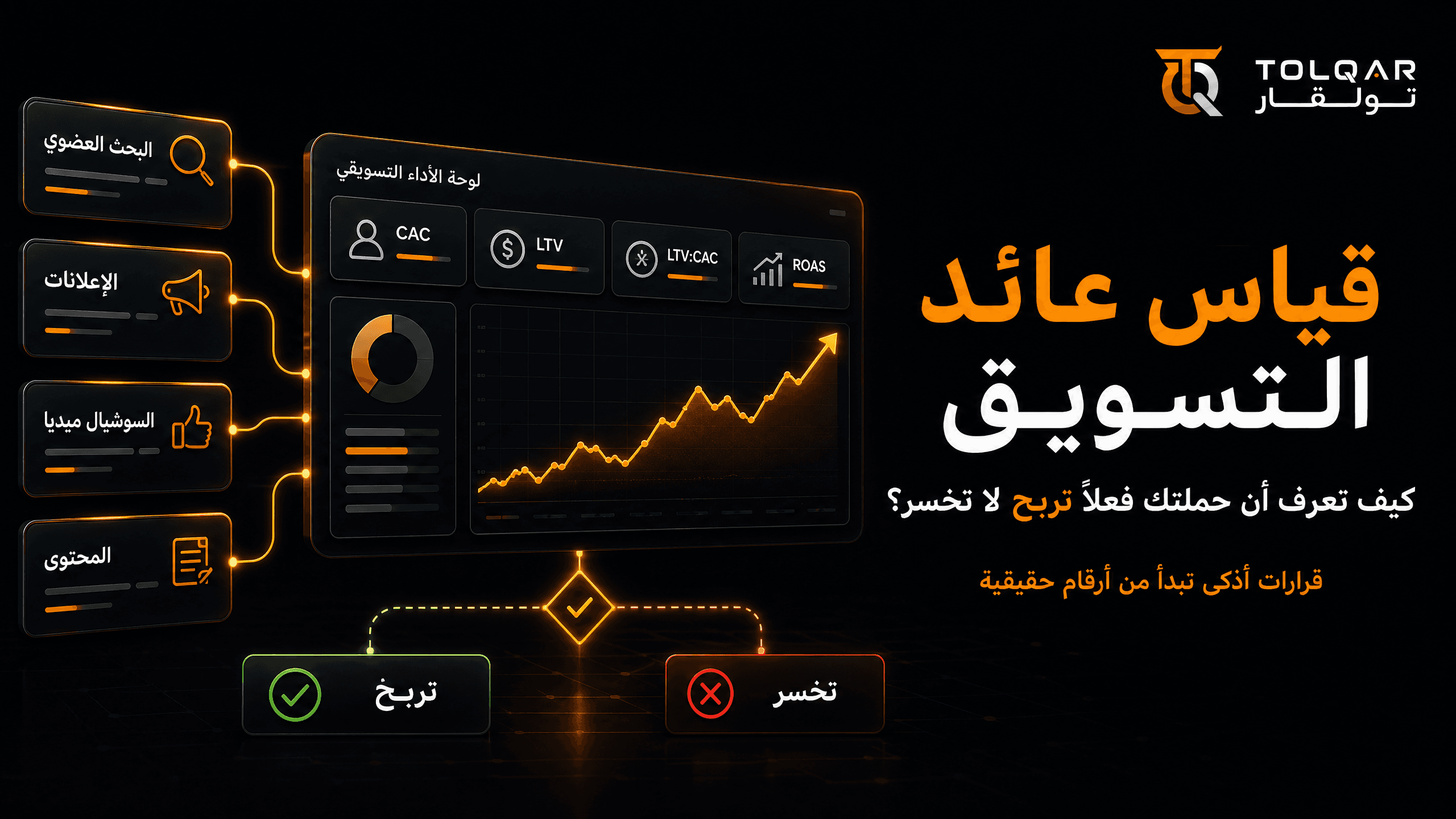
Measuring Marketing ROI: How to Know Whether Your Campaign Is Actually Making or Losing Money
More than half of marketers admit that they struggle to connect content performance to clear financial returns, while fewer than a third say they can measure it with real accuracy. This final article in our series brings everything we have learned together into one clear measurement framework that tells you honestly: Is your marketing actually profitable?
The Common Problem: Measuring Surface-Level Metrics Instead of Real Business Numbers
Many business owners celebrate likes, views, and website visits, while the numbers that actually determine marketing success are very different. Thousands of visits without meaningful conversions do not necessarily create any measurable financial value.
«The right question isn't "How many visitors did we get?" but "How much did we spend to acquire each customer, and how much is that customer actually worth over time?"»
The Real Metrics You Should Track
Customer Acquisition Cost (CAC)
How much you actually spend to acquire one new customer, including all relevant costs — advertising, tools, and team time — not just direct ad spend.
Customer Lifetime Value (LTV)
How much a customer is worth throughout their entire relationship with your business, not just from their first purchase. A customer who makes one low-value purchase may be less valuable than a customer who makes smaller but repeated purchases over time.
The Critical Ratio: LTV vs. CAC
A common benchmark is that customer lifetime value should be at least 3× the cost of acquiring that customer for the economics to be considered sustainable. If the ratio is significantly lower, you may be spending too much to acquire customers relative to the value they generate over time, even if your short-term numbers look positive.
Return on Ad Spend (ROAS)
For every dollar you spend on a specific advertisement, how much revenue do you generate in return? This is a useful immediate metric for paid campaigns, but it does not tell the entire story because it does not account for future purchases from the same customer.
Table: Which Metric Supports Which Decision?
Metric| Answers the Question| When to Use It
CAC| How much did I spend to acquire one customer?| Comparing the efficiency of different marketing channels
LTV| How much is this customer worth over time?| Determining how much you can reasonably spend to acquire them
LTV:CAC| Is my marketing activity financially sustainable?| Evaluating the overall health of your marketing strategy
ROAS| Is this specific ad generating a return?| Optimizing individual paid campaigns quickly and directly
A Common Mistake: Measuring Only the Last Click (Last-Click Attribution)
Giving 100% of the credit to the final interaction before a purchase — usually a direct advertisement — ignores the customer's entire journey.
A customer may have read a blog article, followed your social media account, and only then clicked an advertisement before making a purchase.
Multi-touch attribution provides a more complete view of the customer journey. Moving from a simple last-click model to a more comprehensive attribution model can reveal that different marketing touchpoints contributed more to the buying journey than the basic model initially showed.
In practice, this means organic content — such as articles and social media — may deserve significantly more credit than surface-level attribution suggests.
How to Build a Practical Measurement System Without Overcomplicating It
Step 1: Establish a Clear Starting Point for Every Customer
Know exactly where each customer came from — organic search, a specific advertisement, social media, referral, or another channel — using simple tracking methods.
Step 2: Calculate Your True Cost Per Channel
Don't count only direct advertising spend. Include the team's time spent creating content, managing campaigns, and maintaining each marketing channel.
Step 3: Monitor the Ratio Over Time, Not as a Single Snapshot
Your LTV:CAC ratio changes as your business grows and your customer relationships mature. Review it regularly instead of relying on one fixed measurement.
Step 4: Compare Your Channels Against Each Other, Not Against an Absolute Benchmark
Instead of asking, "Is this a good number?", ask, "Which channel is generating the strongest results compared with the other channels I use?"
Then gradually shift your resources toward the channels delivering stronger economics.
A Practical Example That Brings the Entire Series Together
Imagine an online store that has implemented everything we discussed throughout this series: it built a strong SEO foundation (Article 1), selected the social media platform that best fits its audience (Article 2), created a smart balance between paid advertising and organic growth (Article 3), and invested in content that builds genuine trust (Article 4).
Without accurate measurement, however, the business still doesn't know which of these efforts deserves more investment and which may be consuming its budget without generating sufficient returns.
Measurement is the link that connects all previous marketing efforts to smarter future decisions.
How TOLQAR Can Help
At TOLQAR, we help our clients build clear tracking and measurement systems from the beginning of a marketing project or e-commerce store, rather than discovering months later that no one actually knows which marketing channel deserves continued investment.
Frequently Asked Questions
What is the ideal LTV-to-CAC ratio?
A common benchmark is at least 3×, while higher ratios such as 4× or 5× can indicate stronger marketing efficiency and a larger margin of safety.
Do I need complex tools to measure these metrics?
Not necessarily at the beginning. You can start with simple spreadsheets and basic tracking tools, then move to more advanced systems as your business grows.
How do I know when a marketing channel should be discontinued?
If the LTV:CAC ratio remains below 2× or 3× for an extended period despite optimization efforts, it may be a signal to reassess the channel's economic viability.
The Complete Series: A Final Summary
Throughout this series, we built a complete picture of effective digital marketing:
A strong SEO foundation that generates organic traffic over the long term, a strategic choice of the right social media platform, a thoughtful balance between speed (paid advertising) and sustainability (organic growth), content that builds genuine trust instead of pushing for quick sales, and finally, a measurement system that honestly shows which efforts deserve continued investment.
At TOLQAR, we apply this complete methodology to the marketing projects we build for our clients — decisions based on real data, not temporary excitement or simply copying what everyone else is doing.
Ready to Build a Marketing Strategy With Measurable Results?
"Explore TOLQAR Services" (/services) and start building your marketing journey with a clear plan — from the first step to measuring your actual return.