AI Agent vs. Human Employee: A Realistic Comparison in Numbers
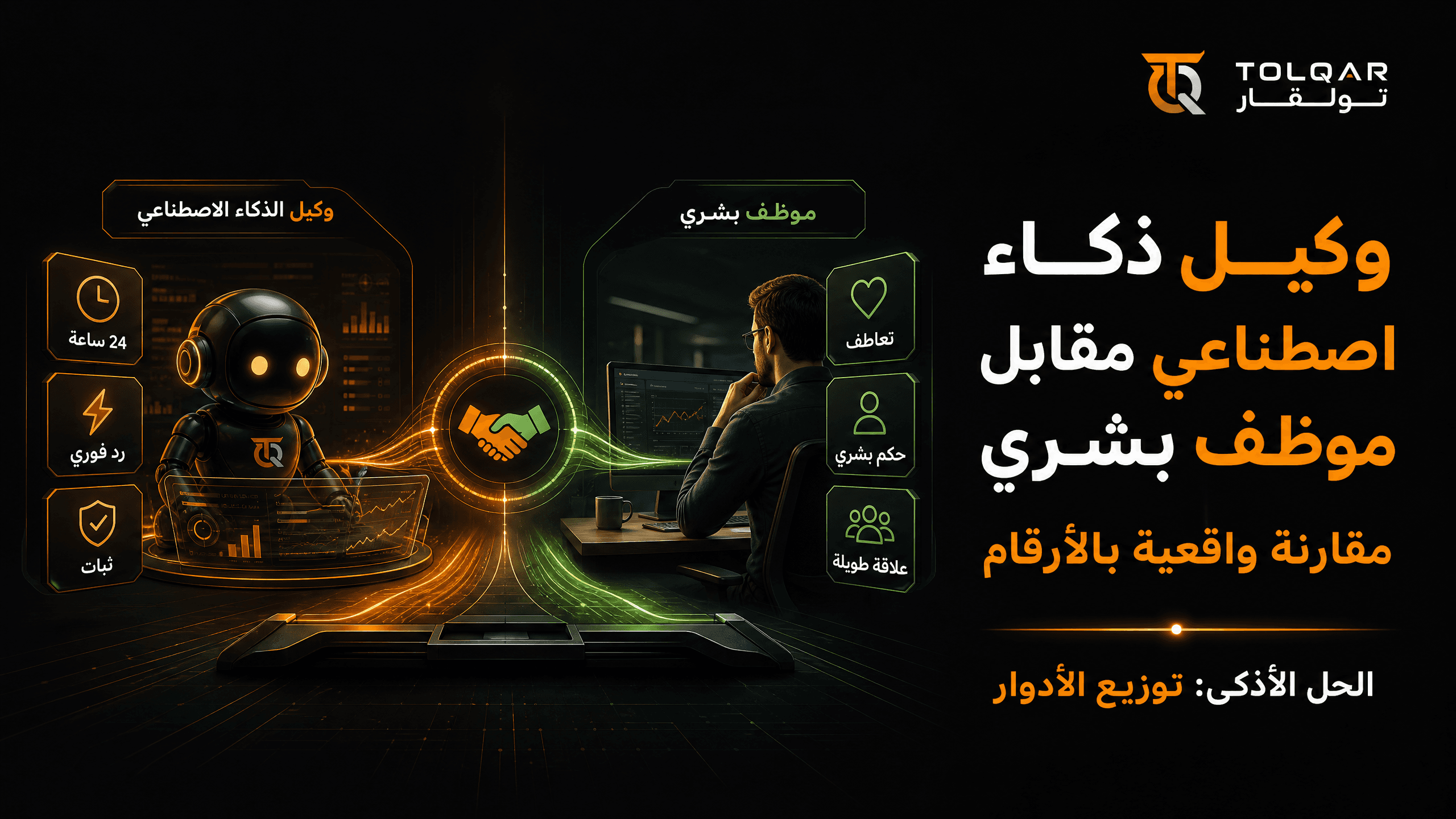
AI Agent vs Human Employee: A Realistic Comparison
This comparison isn't about "which one is absolutely better" — because the honest answer is: it depends on the type of task. AI agents and human employees each have strengths that are radically different from one another, and the best companies don't replace one with the other entirely, but rather determine which task suits which.
Quick Comparison Table
| Metric | AI Agent | Human Employee |
|---|---|---|
| Working Hours | 24/7 without stopping | Fixed working hours |
| Simple Inquiry Response Speed | Instant (seconds) | Depends on availability at time of request |
| Handling Complex Emotional Situations | Limited | Much stronger |
| Cost of High-Volume Repetitive Tasks | Decreases gradually as volume increases | Increases with the number of employees needed |
| Decision Making Outside Pre-defined Rules | Weak | Much stronger |
| Consistency in Applying the Same Policy | 100% consistent every time | Varies depending on employee mood or experience |
| Learning From Brand New Situations | Requires manual updates and training | Learns and adapts automatically |
When Does the AI Agent Excel?
1. High-Volume Repetitive Tasks
Answering the question "Where is my order?" a hundred times a day is an ideal task for automation — the same answer, the same logic, without fatigue or boredom affecting response quality.
2. Availability Outside Working Hours
A customer asking a question at 3 AM gets an instant response, instead of waiting for official working hours to begin.
3. Complete Consistency in Policy Application
The agent applies the same rule every time, whereas a human employee's application of a policy might vary depending on their day or experience.
When Does the Human Employee Excel?
1. Emotional or Sensitive Situations
A customer genuinely angry about a major issue needs real empathy and a flexible decision that understands the full context — something difficult for any automated system to sincerely simulate.
The agent can accurately answer "When is the delivery date?", but it finds it difficult to decide "Should we give this customer an exceptional compensation due to their special circumstance?"
2. Decisions Outside Pre-written Rules
If a situation is completely unexpected and no pre-programmed scenario applies to it, a human employee can improvise a solution, whereas the agent needs to escalate the case to a human team.
3. Building a Long-Term Relationship with an Important Customer
Large deals or strategic clients often require direct human communication that builds trust, not automated responses no matter how accurate they are.
The Smarter Solution: Not Replacement, But Role Distribution
The best companies don't ask "Agent or employee?" — they ask "Which part of the task suits each one?"
Practical example: A customer asks about their order status → The agent responds instantly with the information. If the customer is unsatisfied with the answer and requests a special exception → The agent automatically transfers the conversation to a specialized human employee, instead of trying to decide on its own in a situation outside its scope.
This means your human team gets freed up for tasks that actually require human judgment, instead of wasting their time on simple repetitive questions.
A Question Worth Asking About Any Task You Have
Ask yourself: "If this task were repeated 100 times in the same way, would the answer change depending on the situation, or stay almost the same?"
If the answer is "It stays almost the same" → Excellent candidate for automation.
If the answer is "It changes depending on each case" → Needs human judgment.
Conclusion
Automation isn't a threat to your team's jobs; it's a tool that lifts the burden of repetitive tasks off them so they can focus on tasks that truly need their thinking and expertise. The companies that understand this balance are the ones that benefit most from automation, not the ones trying to replace everything entirely.
Next Step
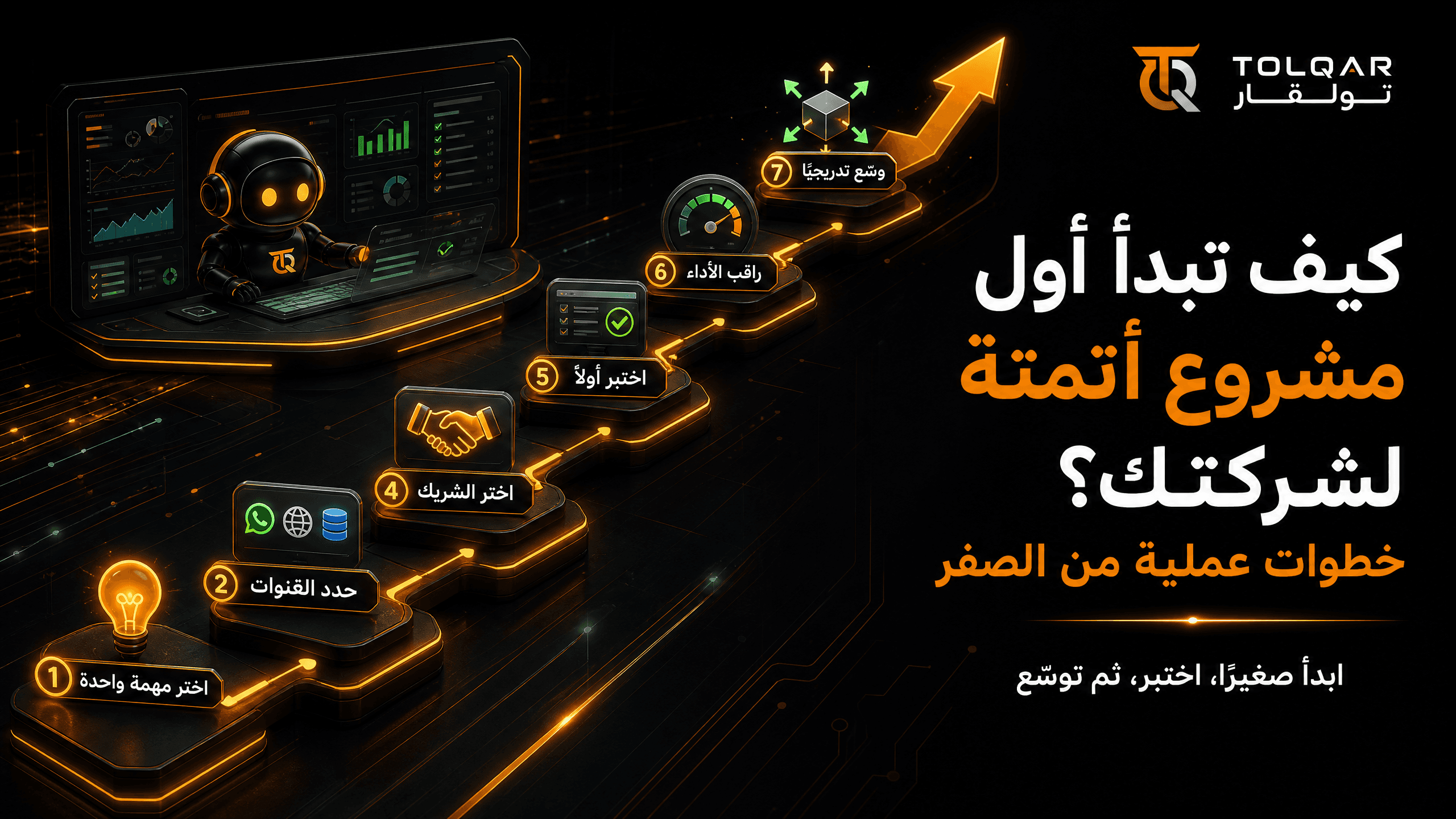
After understanding when to use each option, read our latest article in the series: How to start your company's first automation project? to learn the practical steps to get started.
Browse the AI Agent Business Automation service to see how we design the right role distribution specifically for the nature of your work.